
The sun holds an important place in human life. In addition to boosting mood and sleep and helping reduce depression, sunlight also enables the body to produce the necessary vitamin D. However, it is important to keep in mind that sunlight also has its downsides.
Excessive exposure to the sun and insufficient use of sunscreen significantly increase the risk of sunburn and skin cancer. It is important to remember that the effects of UV radiation are cumulative – skin that has already been sunburned once may be more sensitive to future exposure.
A global skin cancer study spanning 17 years shows that the incidence of skin cancer has increased. According to the study, there were 2.5 times more cases of skin cancer than lung cancer and nearly three times more than breast cancer. Therefore, it is crucial to protect yourself by using sun protection products correctly and regularly, and by wearing protective clothing whenever possible.
What is the difference between UVA and UVB radiation?
Sunlight's ultraviolet (UV) radiation is divided into three main categories based on wavelength: UVA, UVB, and UVC. Of these, only UVA and UVB reach the Earth’s surface. UVA rays cause premature skin aging, while UVB rays are responsible for sunburn.
Even in Nordic countries, where the sun may seem weaker, UV levels during the day can still be high enough to harm the skin.
What should you consider when choosing sunscreen?
When selecting a sunscreen, always read the product information and follow the usage instructions. It's important to choose a product that protects against both UVA and UVB radiation.
Pay attention to the SPF (Sun Protection Factor). SPF indicates how long you can stay in the sun without burning. For example, if a person normally gets sunburned in 10 minutes, an SPF 20 sunscreen would allow for 10 × 20 = 200 minutes of sun exposure.
It is important to emphasize that even the highest SPF products do not offer complete protection from UV radiation. When used correctly, they reduce the risk of skin cancer, but long sun exposure – especially at midday – should still be avoided. Protective clothing, hats, sunglasses, and staying in the shade are also recommended.
How often should sunscreen be reapplied?
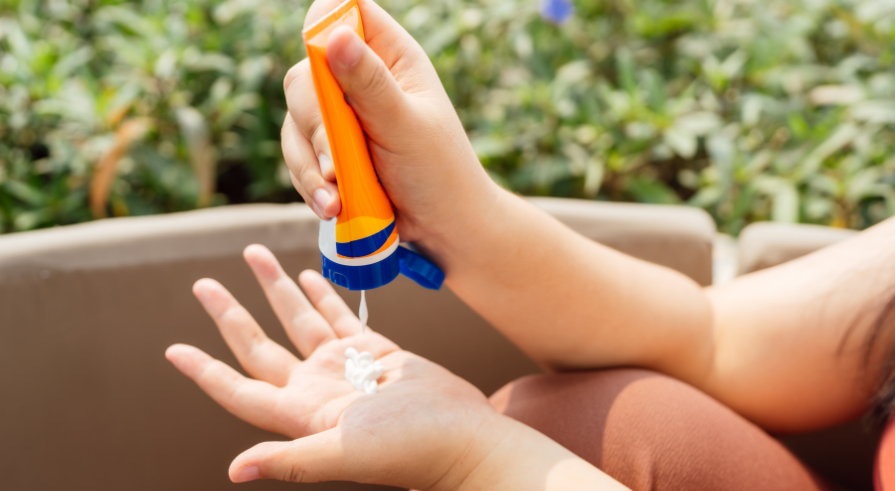
Sunscreen should be applied in a generous and even layer and reapplied regularly. It is recommended to apply sunscreen 20–30 minutes before going out into the sun and to reapply it every two hours – definitely after swimming as well.
To achieve the SPF stated on the product, 2 mg of sunscreen should be applied per square centimeter of skin. For an adult, this equals about six teaspoons or 36 grams for the whole body.
How to protect children from the sun?
Babies’ and young children’s skin is especially delicate and sensitive to UV radiation. They can get sunburned after just 20 minutes in the sun. Therefore, children should avoid being in the sun during midday, and only sunscreens specifically designed for their skin should be used, following the product instructions carefully.
Sun Protection Checklist
-
Protect children from the sun with clothing made of cotton or linen.
-
Choose a suitable sunscreen for each family member.
-
Apply sunscreen just before or up to 30 minutes before sun exposure.
-
Reapply after swimming.
-
Do not inhale spray sunscreen.
-
Wash off sunscreen in the evening before going to bed.
-
Always use sunscreen according to the instructions on the package.

